
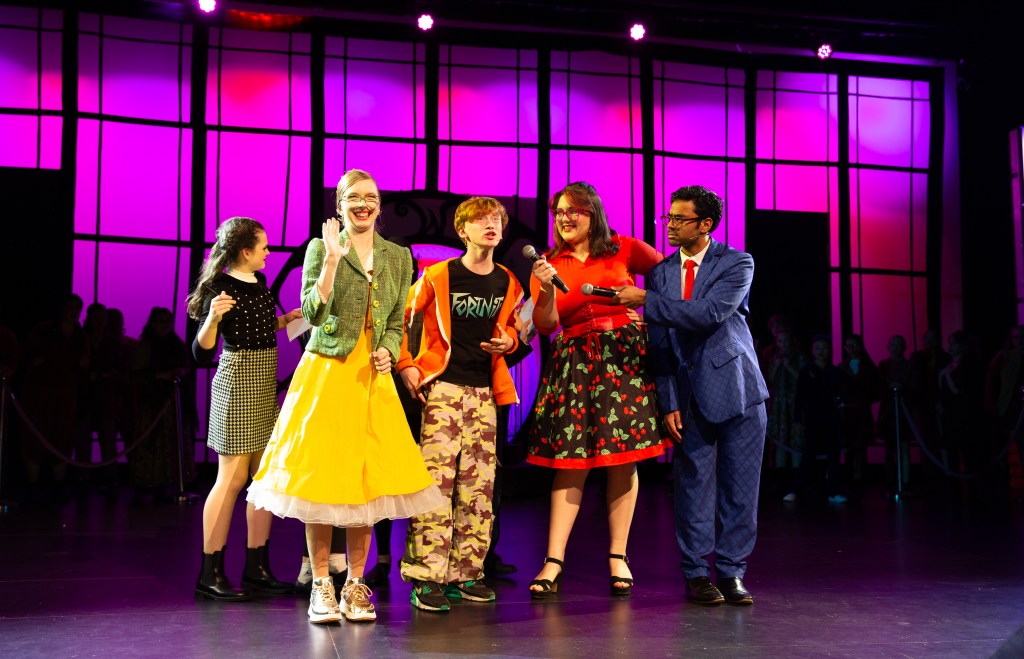
Western Sydney Musical Theatre’s inaugural production of Charlie and the Chocolate Factory is the kind of show that immediately appeals to all audiences. It’s a popular title packed with colourful characters and iconic moments, making it an exciting opportunity for emerging talent in the community theatre space. While the production showed clear commitment and moments of creative potential, there were areas that could have benefited from more cohesive direction and polish, particularly in pacing and design.
Starting with the cast, which featured incredible talent, Brayden Macfarlane-Walker as Willy Wonka had a commanding and animated stage presence. Although just missing a bit more of the pizzazz in his line delivery that one would expect from the ethereal, quirky chocolatier, Macfarlane-Walker had charm, and his choices felt aptly unpredictable given the erratic nature of the character.
Brooke Wiles as Charlie Bucket played the hopeful and earnest titular character. Wiles was endearing as Charlie and stood out in her solo songs, especially with the way she filled the space with ‘A Letter from Charlie Bucket’. Whilst some of her lines were difficult to hear, Wiles made the most of her stage presence and made me empathise with her in the more emotional moments of the show.
Jeremy Barons as Grandpa Joe was an absolute standout. From the first scene, Barons graced us with the uplifting, dynamic, and larger-than-life Grandpa Joe that surprised us at every turn. He was a scene-stealer in Act One, especially in ‘I’ve Got A Golden Ticket’, a lively number that gave a jolt of excitement in anticipation for the Act One finale.
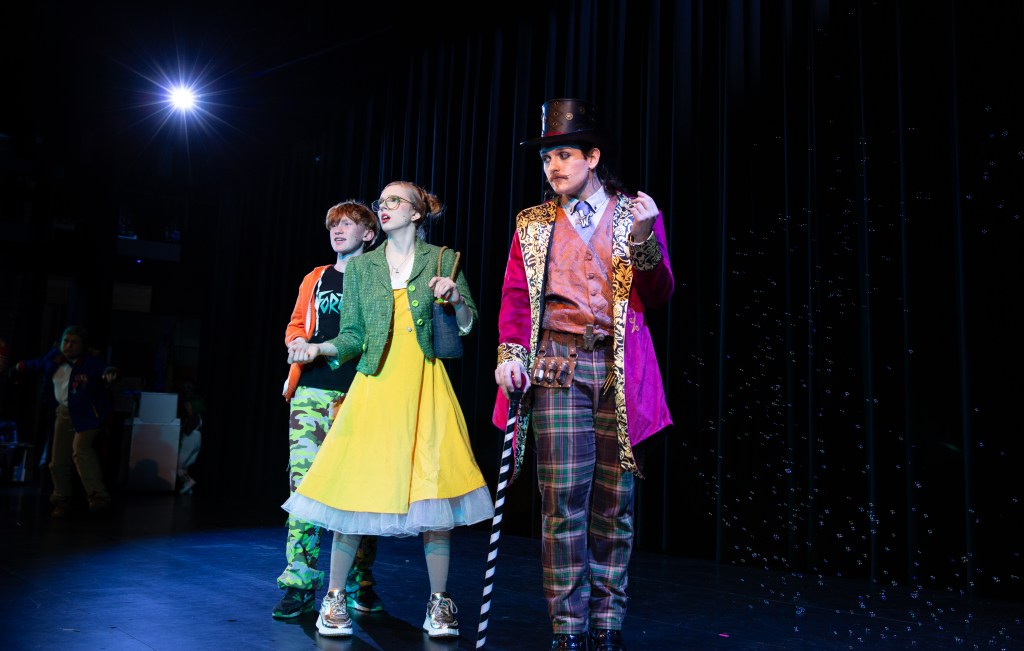
Other standouts include Lusiana Slade as Mrs Bucket with her subtle and sincere performance that added the emotional depth needed for the show, Xion Jarvis as Augustus Gloop was lively, funny, and had unmatched energy especially in ‘More of Him to Love’ which was a highlight, and Alaska Jarvis as Mrs Teavee, who injected a dose of realism that starkly contrasted against the fantastical world, whose exaggerated and satirical delivery was constantly hilarious.
The direction of chemistry was an area with opportunities to go further with some characters. With Jerry Jubilee and Cherry Valentine, their energies were at different levels which made it harder to understand where they were coming from. For Charlie and Wonka in their candy store scenes, clear beats of connection were missing in their arc which made the dynamic feel unearned. In contrast, the Bucket grandparents’ scenes were funny and dynamic, which had clear synergy with their back-and-forths and brought lightness to the slower moments.
In the aftermath of the viral AI-generated wonderland that was the 2024 ‘Willy’s Chocolate Experience’, the first thing on my mind going into this show was “what will the set look like?” The big selling point of this musical, and where all the magic comes from, is Willy Wonka’s factory, and its wonder lives and dies by the visual impact of the set. That aspect alone makes this show a daunting task to put on at a community theatre level, given the budget requirements of the fantasy setting. They succeeded with this in Act One, as when the loft that housed the Bucket family was wheeled onto the stage, I was impressed by how large and robust it was, having hope for the reveal of the factory in Act Two.
This was, unfortunately, the peak of the set-work for me, though. While the factory itself wasn’t as sad as the Willy Wonka Experience, it was largely empty, which wasn’t helped by the size of the stage. The few LED screens on the back wall helped fill the space, but they served more to distract from the set than to complement it, with some rooms of the factory relying almost entirely on projections and having very few physical elements.
As a more budget-friendly alternative to large set pieces, I think a more flashy use of lighting could have also helped enhance the wonder of the factory. Creating smaller intimate spaces using curtains and set pieces could section off parts of the stage, thus narrowing focus and making the space feel less overwhelmingly large. Another example of this which was done effectively in the show were the character “elimination” stunts, which were done in a vignette-style liminal space, making the lack of set feel intentional and well-utilised. The choreography, which heavily featured the big ensemble, was also a great use of the space. The dance ensemble and oompa loompas were a delight to see every time they came on stage and, evidently, were having a great time.
This production of Charlie and the Chocolate Factory showed ambition in scale, and with more cohesive directing and strategic choices, could’ve pushed this further. Many of the show’s technical elements missed the mark but performances and moments stood out — particularly in physical staging and stunts. Community theatre continues to be a space where aspiring performers, designers, and directors can learn, grow, and take bold swings. That’s the kind of momentum that keeps local theatre thriving.
Charlie and the Chocolate Factory by WSMT runs until 13th July at Greenhalgh Theatre, Lindfield. Book tickets here.
